Power Shift: How Southern Energy Utilities Are Leading the Clean Energy Transition Without Leaving Their Workforce Behind
For generations, the Southern United States has powered the nation. Coal mined from the hollows of Appalachia, natural gas drawn from the Gulf of Mexico's depths, and oil refined along the Texas and Louisiana coasts have kept American industry humming for more than a century. The energy sector has long been a cornerstone of Southern economic identity—and the men and women who built it are not easily forgotten.
But the energy landscape is changing, and the South is changing with it. What distinguishes the regional response, however, is not the speed of the pivot or the boldness of the marketing language surrounding it. It is the deliberateness. Southern energy companies are approaching the clean energy transition with the same measured pragmatism that has defined their operations for decades—balancing fiduciary responsibility, community obligation, and long-term infrastructure planning in ways that coastal energy markets rarely replicate.
Legacy Operations as a Launchpad, Not a Liability
The conventional narrative positions fossil fuel infrastructure as an obstacle to clean energy progress. In the South, a growing number of utilities are rewriting that story. Rather than treating legacy coal plants and natural gas facilities as stranded assets to be shuttered and forgotten, forward-thinking companies are leveraging existing grid infrastructure, transmission corridors, and workforce expertise as the foundation for renewable buildout.
Duke Energy Carolinas, for instance, has committed to retiring its remaining coal fleet while simultaneously expanding solar capacity across North and South Carolina. Critically, the company has invested in retraining programs that allow former plant operators and maintenance technicians to transition into roles supporting solar farm operations and grid modernization projects. The skill sets are not identical, but they are transferable—and the company has recognized that institutional knowledge built over decades of plant operations is an asset worth preserving.
Similar dynamics are playing out at Alabama Power, a subsidiary of Southern Company, where investment in grid resilience and battery storage technology has accelerated alongside ongoing natural gas operations. The company's approach reflects a broader philosophy within Southern Company's portfolio: that a managed energy transition, rather than an abrupt one, better serves both shareholders and the communities that depend on reliable, affordable power.
Solar's Southern Surge
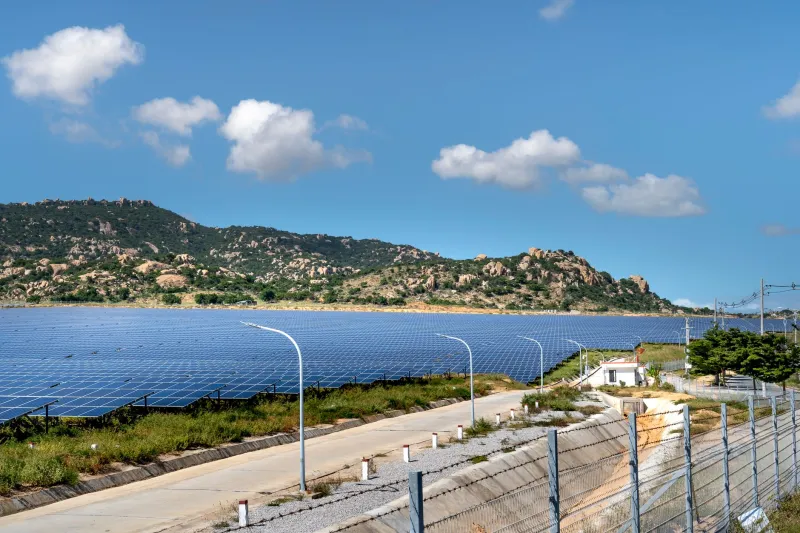
The geographic advantages of the South for solar development are well documented. States from Virginia to Texas receive among the highest levels of solar irradiance in the contiguous United States, and the availability of flat, rural land has made utility-scale solar development economically attractive at a pace that continues to accelerate.
Georgia has quietly emerged as one of the most significant solar markets in the country. Georgia Power's ongoing investment in large-scale solar projects—including the Vogtle nuclear expansion, which represents the first new nuclear units brought online in the U.S. in decades—reflects a diversified clean energy strategy that few states can match. The combination of solar, nuclear, and continued natural gas peaking capacity gives Georgia's grid a resilience profile that purely renewable-dependent grids have struggled to achieve.
In Texas, the story is more complex but no less instructive. The state's deregulated electricity market has made it the largest wind energy producer in the nation, while its solar capacity has grown exponentially over the past five years. The challenge of grid reliability—made painfully apparent during the 2021 winter storm crisis—has prompted serious investment in weatherization, demand response technology, and storage infrastructure. Texas's energy sector, for all its turbulence, remains a proving ground for large-scale grid innovation.
The Workforce Equation
No conversation about the Southern energy transition is complete without a candid accounting of workforce impact. The communities built around coal mining in eastern Kentucky, southwestern Virginia, and West Virginia have already endured the economic consequences of a declining industry. The question now is whether the clean energy economy will reach those communities—or simply bypass them in favor of more accessible markets.
Some of the most promising answers are emerging from partnerships between regional utilities, community colleges, and state workforce development agencies. The Appalachian Regional Commission has directed significant federal funding toward clean energy workforce training initiatives, and several Southern states have created dedicated programs to credential workers in solar installation, wind turbine maintenance, and electrical grid technology.
Tennessee Valley Authority, one of the largest public power companies in the United States, has taken an active role in supporting economic development across its seven-state service territory. Its investments in grid modernization and renewable procurement are being paired with community development initiatives designed to ensure that the transition creates opportunity in the same rural counties that historically powered the region's economy.
Regulatory Environments and State-Level Strategy
The regulatory landscape across Southern states varies considerably, and those differences shape the pace and character of the clean energy transition in meaningful ways. States with vertically integrated, regulated utilities—such as Georgia, Alabama, and Mississippi—tend to see more coordinated, long-range energy planning under the oversight of public service commissions. That structure, while sometimes criticized for limiting market competition, has also enabled the kind of deliberate, infrastructure-first investment that positions those grids for durable performance.
By contrast, states with deregulated markets, most notably Texas, experience faster market-driven renewable deployment but face greater challenges in ensuring system reliability and equitable access to clean energy benefits. Neither model is without tradeoff, and Southern policymakers are watching each other's experiments closely.
What is consistent across the region is a growing recognition among state legislatures and regulatory bodies that energy independence—broadly defined to include domestic renewable generation—is a matter of economic security as much as environmental policy. That framing resonates in a region where energy sovereignty has long been a point of pride.
Building on What the South Does Best
The Southern energy transition is not being driven primarily by ideological commitment to environmentalism, nor should observers expect it to be. It is being driven by economics, by infrastructure necessity, by workforce realities, and by the competitive pressure of a national energy market that is shifting regardless of any single region's preferences.
What Southern energy companies bring to this transition is something that cannot be manufactured overnight: deep operational experience, established community relationships, and a pragmatic culture that prizes reliability above rhetoric. Those qualities are exactly what a large-scale infrastructure transformation requires.
The South did not build its energy legacy by chasing trends. It built that legacy through patient investment, technical discipline, and a willingness to do the unglamorous work of keeping the lights on. As the clean energy economy matures, those same attributes are proving to be competitive advantages—and the companies that recognize this are positioning themselves not merely to survive the transition, but to lead it.
The power may look different in the years ahead. But in the South, the commitment to keeping it flowing reliably and affordably remains unchanged.