Built to Endure: How Southern Developers Are Turning Climate Vulnerability Into a Real Estate Advantage
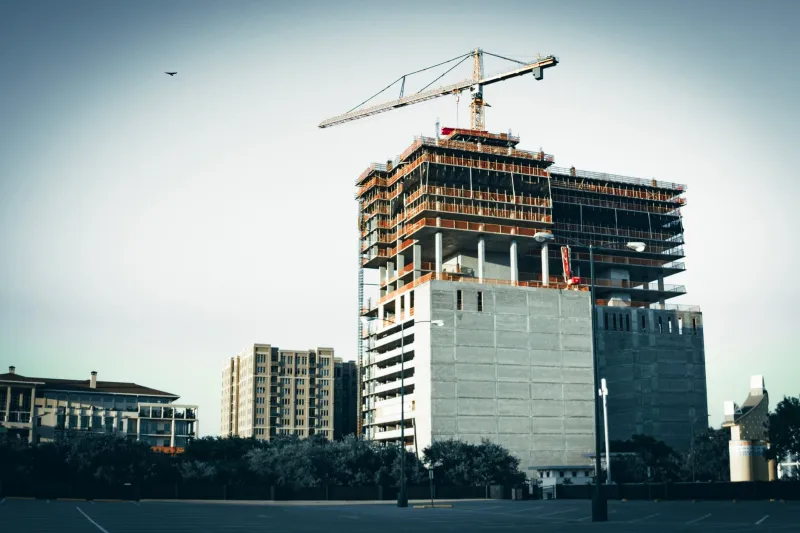
For decades, the conventional wisdom held that the American South's exposure to hurricanes, flooding, and extreme heat represented a liability—a footnote in risk assessments that national investors used to justify lower valuations and higher insurance premiums. That calculus is changing. Across the Gulf Coast, the Carolinas, and the broader Sun Belt corridor, a generation of developers, engineers, and property managers has spent years building something more durable than market cycles: expertise in climate-adaptive construction that is now commanding national attention.
What began as regional necessity has matured into genuine competitive advantage.
Learning From the Storms
The South's relationship with extreme weather is not new. Hurricanes Katrina, Harvey, Irma, and Ian each left behind not only devastation but also hard-won institutional knowledge. In the years following each major event, Southern builders, municipal planners, and commercial property owners absorbed lessons that their counterparts in other regions simply have not had occasion to learn.
Florida's building codes, widely regarded as among the most rigorous in the nation, require commercial structures to withstand wind loads that would be considered extraordinary in most other states. Louisiana's post-Katrina reconstruction efforts produced an entire generation of engineers fluent in elevated foundation systems, breakaway walls, and flood-resistant mechanical placement. The Carolinas, battered repeatedly by Atlantic storms, have pioneered green infrastructure approaches—bioswales, permeable paving, and retention pond networks—that manage stormwater at a scale most Northern cities are only beginning to contemplate.
These are not theoretical innovations. They are operational standards, field-tested against real storms and refined through genuine consequence.
From Compliance to Competitive Strategy
What distinguishes the current moment from prior periods of post-disaster rebuilding is the degree to which Southern developers have shifted from reactive compliance to proactive differentiation. Forward-thinking firms across the region are no longer simply meeting code minimums; they are voluntarily exceeding them, treating climate resilience as a marketable asset rather than a regulatory burden.
In Houston, commercial developers are incorporating on-site detention systems into mixed-use projects—not because the city mandates it for every parcel, but because tenants and their insurers increasingly expect it. In Savannah and Charleston, historic port-adjacent development is being reimagined with tidal surge barriers and elevated first-floor designs that protect both structural integrity and business continuity. Along the Mississippi Gulf Coast, industrial facilities are being sited and oriented with prevailing storm wind patterns in mind, a practice that reduces both physical risk and long-term insurance costs.
Property managers across the region are also investing in energy resilience infrastructure—backup generation, microgrid connectivity, and rooftop solar paired with battery storage—that keeps commercial tenants operational during grid disruptions that have historically accompanied major weather events. In a region where power outages following storms can last days or weeks, operational continuity has become a genuine differentiator in lease negotiations.
Attracting Capital That Used to Look Away
The institutional investment community is paying close attention. For years, major real estate investment trusts and pension fund allocators applied blanket risk discounts to Southern commercial real estate, citing climate exposure without fully accounting for the mitigation infrastructure that sophisticated local developers had already built. That gap between perception and reality is narrowing.
Environmental, social, and governance mandates have accelerated the shift. Institutional investors now require detailed climate risk disclosures across their portfolios, and assets in climate-exposed markets that can demonstrate genuine resilience features are increasingly valued above those that cannot. Southern developers who have spent years hardening their properties are finding that documentation and third-party certification of those features—through frameworks such as LEED, FORTIFIED, and the Insurance Institute for Business and Home Safety standards—translate directly into financing advantages.
The FORTIFIED commercial building standard, developed by the IBHS and widely adopted across the Gulf states, has become a particularly meaningful credential in this environment. Properties certified under FORTIFIED standards consistently demonstrate reduced claims severity following major weather events, a track record that resonates with both lenders and insurers. As ESG-driven capital flows expand, that track record is becoming a bankable asset in ways it was not a decade ago.
Water as the Central Design Challenge
If wind resistance defined the first generation of Southern climate-adaptive construction, water management is defining the current one. Across the region, development teams are confronting the reality that rainfall intensity, sea-level rise, and aging stormwater infrastructure collectively represent the most significant long-term threat to commercial property values—and they are responding with engineering approaches that are reshaping site design from the ground up.
Living shorelines, constructed wetlands, and blue-green infrastructure networks are appearing in commercial and industrial developments from Tampa Bay to the Texas Hill Country. These systems serve dual purposes: they manage water volumes that traditional gray infrastructure cannot handle efficiently, and they create environmental buffers that reduce flood insurance premiums and regulatory friction for future development phases.
Municipal governments across the South have become willing partners in this effort. Cities including Raleigh, Nashville, and New Orleans have restructured stormwater fee structures to reward private investment in on-site retention, effectively subsidizing the adoption of practices that reduce public infrastructure burden. The alignment of private incentive and public interest has accelerated adoption in ways that regulatory mandates alone rarely achieve.
Setting Standards the Rest of the Country Will Follow
There is a broader significance to what Southern commercial real estate is building, one that extends well beyond regional market dynamics. As climate variability intensifies across the entire United States—bringing drought and wildfire risk to the West, flooding to the Midwest, and coastal erosion to the Northeast—the resilience frameworks that Southern developers have refined through necessity are becoming relevant everywhere.
Building science professionals, insurance actuaries, and infrastructure planners from outside the region are increasingly traveling South not to offer expertise but to observe and learn. The South's decades of hard experience with extreme weather, combined with the economic pressure to develop viable solutions rather than simply avoid exposure, has produced a body of practical knowledge that no other American region can yet match at scale.
For Southern developers, property managers, and the communities that depend on their work, that accumulated expertise represents something genuinely valuable: a competitive position built not on favorable geography or regulatory arbitrage, but on the sustained application of intelligence to difficult problems. In commercial real estate, as in most fields, that is the most durable advantage of all.
The storms will keep coming. The question is who is best prepared to build through them—and on that measure, the South has quietly moved to the front of the line.