Already Home: How Southern Manufacturers Quietly Won the Reshoring Race
The national conversation around reshoring tends to orbit the same familiar imagery: ribbon cuttings at semiconductor plants, presidential factory tours, and splashy announcements from Fortune 500 firms pledging billions to domestic production. What that narrative consistently misses is the quieter, more methodical transformation already underway across the Southern United States—one being driven not by press releases, but by results.
From the Piedmont corridor of the Carolinas to the Tennessee Valley and the industrial spine of Alabama, manufacturers are bringing production back to American soil with a pragmatism that has outpaced the broader national debate. They are doing it through targeted capital deployment, deep workforce partnerships, and a supply chain geography that coastal competitors simply cannot replicate.
The Structural Advantage No One Is Talking About
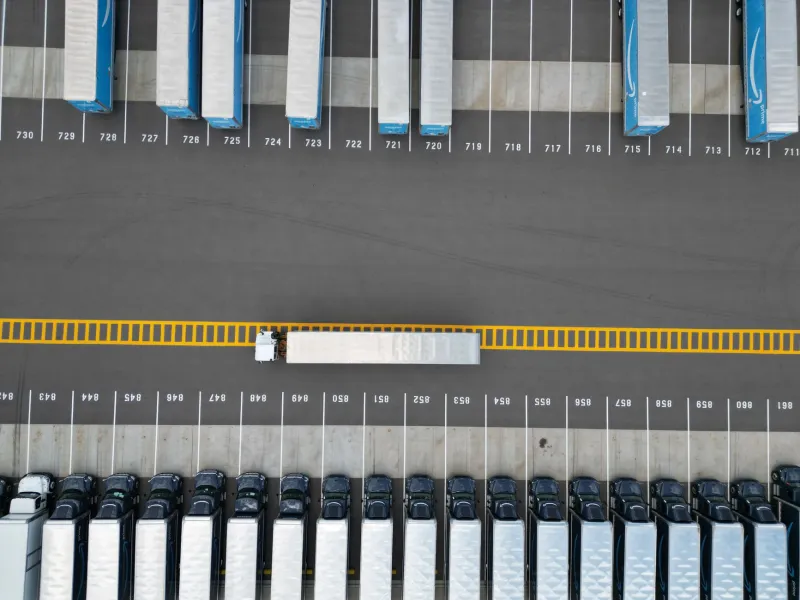
The South's manufacturing resurgence is not accidental. Decades of investment in port infrastructure, interstate connectivity, and right-to-work labor policy have created an operating environment that is structurally favorable to industrial growth. The Port of Savannah remains the fastest-growing container port in North America. The deepwater terminals at Mobile and Charleston have expanded their capacity to handle the freight volumes that reshoring demands. These are not marginal improvements—they represent a logistics foundation that gives Southern manufacturers a genuine cost-per-unit advantage over facilities operating in higher-cost regions.
Site selection consultants who advise multinational corporations on domestic expansion consistently rank Southern states at or near the top of their recommendations for manufacturing footprint decisions. Lower land costs, competitive utility rates, and favorable tax structures make the financial case before a single machine is installed.
Automation as the Equalizer
One of the more persistent objections to reshoring has been the labor cost differential between domestic and offshore production. Southern manufacturers have largely neutralized that argument through strategic investment in automation and advanced manufacturing technology.
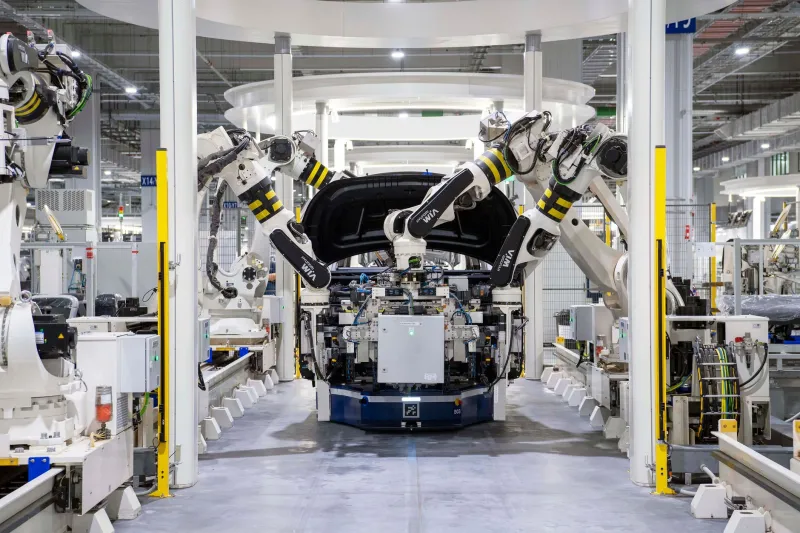
In Spartanburg County, South Carolina—a region that has cultivated one of the most sophisticated automotive manufacturing ecosystems in the country—suppliers have deployed collaborative robotics systems that allow smaller workforce teams to maintain throughput levels that would have required three times the headcount a decade ago. BMW's long-tenured presence in that corridor has catalyzed a supplier network that now operates with a level of technological sophistication that rivals any manufacturing cluster in the world.
Similarly, in Huntsville, Alabama, aerospace and defense manufacturers have embraced digital twin technology and additive manufacturing at a pace that reflects the region's deep engineering talent base. The presence of NASA's Marshall Space Flight Center and the U.S. Army's Redstone Arsenal has created a culture of precision manufacturing that transfers readily to commercial production environments. Companies that have relocated or expanded operations into this market have found a workforce already oriented toward exacting quality standards.
Workforce Development: The Southern Competitive Secret
Perhaps the most durable competitive advantage Southern manufacturers possess is their relationship with the region's community college and technical education systems. States like Tennessee, Georgia, and the Carolinas have built workforce development infrastructure that functions as a direct pipeline from classroom to production floor.
Tennessee's Drive to 55 initiative—an effort to ensure that 55 percent of the state's residents hold a post-secondary credential by 2025—has produced measurable results for manufacturers operating in that market. Volkswagen's Chattanooga facility and its network of regional suppliers have drawn directly from Tennessee College of Applied Technology programs to staff their operations. The alignment between curriculum and employer need is not theoretical; it is the product of deliberate, sustained collaboration between industry and education leaders.
In North Carolina, the Apprenticeship NC program has become a model for other states seeking to replicate the German-style dual education system that helped build some of the world's most productive manufacturing economies. Precision machining, industrial maintenance, and mechatronics are among the high-demand disciplines where apprenticeship graduates are moving directly into roles that would otherwise require years of on-the-job development.
For businesses evaluating a reshoring decision, this infrastructure materially reduces the risk profile of a domestic production move. The workforce is not theoretical—it is already being trained.
Regional Supply Chains: Built for Resilience
The supply chain disruptions of the early 2020s exposed the fragility of globally dispersed production networks in ways that accelerated executive-level interest in domestic sourcing. Southern manufacturers were positioned to respond, in part because many had never fully abandoned regional supply relationships in the first place.
The automotive manufacturing corridor stretching from Alabama through Tennessee and into Kentucky has long maintained a dense network of Tier 1 and Tier 2 suppliers operating within close geographic proximity to final assembly facilities. When global supply chains buckled under pandemic pressure, these regional networks demonstrated a resilience that validated decades of localized sourcing strategy.
That same logic is now being applied across other sectors. Textile and apparel manufacturers in the Carolinas are rebuilding domestic supply relationships that had been offshored over the prior thirty years. Medical device companies in the Research Triangle are sourcing components from regional fabricators rather than relying on extended international supply lines. Food and beverage processors across the Gulf Coast are shortening their ingredient supply chains to reduce both cost and exposure to logistical disruption.
The Opportunity for Regional Businesses
The reshoring trend creates meaningful commercial opportunity for businesses throughout the Southern supply chain ecosystem—not just for the manufacturers executing the moves themselves. Engineering firms, logistics providers, commercial real estate developers, workforce training organizations, and regional banks all stand to benefit from the capital flows that reshoring generates.
For family-owned businesses and mid-market operators across the region, the practical question is how to position for participation. Manufacturers returning production to domestic facilities require qualified local suppliers, reliable service providers, and financial partners who understand industrial operations. Businesses that can credibly serve those needs—and communicate that capability clearly—are well situated to capture a share of the investment that reshoring is directing into Southern markets.
Industrial real estate developers in markets like Greenville-Spartanburg, Huntsville, and the greater Nashville corridor are already responding to this demand. Speculative industrial construction has accelerated across the region, reflecting developer confidence that occupancy demand will continue to outpace available supply.
A Movement Defined by Execution
Reshoring will continue to generate headlines at the national level, and those headlines will continue to focus on the largest and most visible announcements. But the manufacturers who are actually moving the needle—who are building sustainable domestic production operations with real margins and competitive staying power—are disproportionately concentrated in the Southern United States.
They are not waiting for policy incentives to mature or for the national narrative to catch up with their reality. They are running lean, investing in their people, and leveraging a regional infrastructure that has been built, in many cases, over generations. The quiet revolution, it turns out, has already arrived. It just did not need a press conference to get started.