Aged to Export: How Southern Distillers Are Taking Bourbon Global Without Losing Their Soul
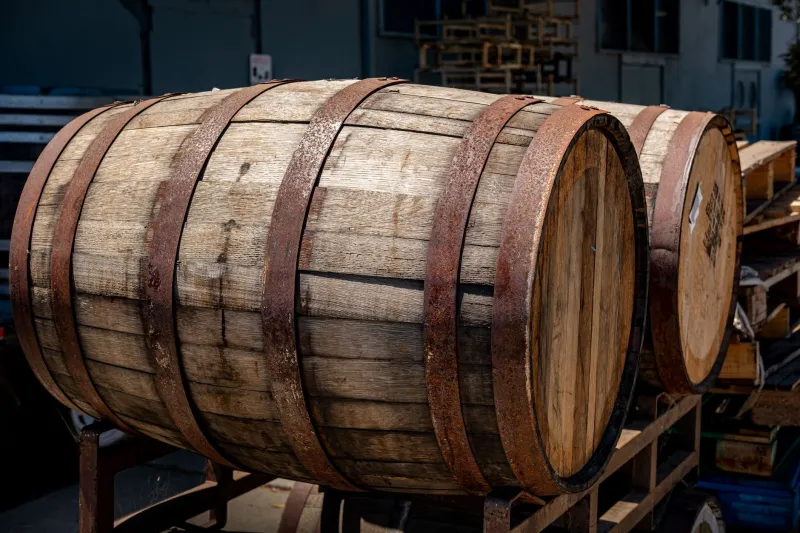
There is a particular irony embedded in the global bourbon boom: the spirit that once defined small-batch Southern tradition has become one of America's most potent international export stories, and the distilleries driving that growth are doing so not by reinventing themselves for foreign markets, but by doubling down on everything that makes them unmistakably Southern. For business leaders across the region, that strategic choice carries lessons that extend well beyond the rickhouse.
American whiskey exports surpassed $1.2 billion in value in recent years, with bourbon leading the category and markets from Japan to Germany developing sophisticated consumer bases eager to pay premium prices for authentic American provenance. Yet the distilleries capturing the largest share of that demand are not the ones that have softened their regional identity for international palatability. They are the ones that have made Kentucky limestone water, Tennessee charcoal mellowing, and multi-generational family recipes the centerpiece of their global marketing narrative.
Heritage as a Hard Asset
In most industries, legacy can become a liability — a constraint that prevents nimble adaptation to shifting markets. In the premium spirits sector, heritage functions differently. It operates as a hard asset, one that appreciates with time and cannot be replicated by a competitor regardless of their capital resources.
Distilleries that have been operating since the nineteenth century carry something no amount of marketing spend can manufacture: documented continuity. When a fifth-generation master distiller explains that a particular mash bill has remained unchanged since his great-great-grandmother recorded it in a ledger that still sits in the family office, that narrative resonates with international consumers in ways that transcend language barriers. The story sells the spirit before the spirit has a chance to sell itself.
Savvy distillery operators have recognized that protecting this heritage is not merely a cultural obligation — it is a brand protection strategy with direct revenue implications. Several prominent Kentucky and Tennessee producers have made deliberate decisions to maintain or restore original production methods precisely because those methods differentiate their products in crowded international markets where mass-produced alternatives compete primarily on price.
Supply Chain Discipline in the Face of Demand Pressure
Perhaps the most consequential business decision facing a growing Southern distillery is how to respond when international demand begins to outpace production capacity. The temptation to accelerate output — to shorten aging periods, to source grain from distant suppliers, to license production to third parties in other regions — is considerable. The distilleries that have preserved their brand equity have, almost universally, resisted that temptation.
Bourbon's legal definition requires that it be produced in the United States, but the most successful premium producers have gone considerably further in their supply chain commitments. Many have established direct relationships with regional grain farmers, some of whom operate under multi-year contracts that provide agricultural partners with revenue stability while ensuring the distillery maintains control over raw material quality and origin. This kind of vertical integration serves a dual purpose: it protects product consistency and it generates an additional layer of storytelling — the farmer's name, the county of origin, the specific corn variety — that premium consumers in Tokyo or London find genuinely compelling.
The aging constraint is perhaps the most honest expression of a distillery's long-term commitment to quality. Bourbon must be aged in new charred oak containers, and premium expressions typically require a minimum of four to twelve years of maturation. A distillery cannot fake its way through that timeline. The decision to invest in inventory that will not generate revenue for a decade is a statement of strategic patience that resonates with investors, wholesale partners, and consumers alike.
Marketing Authenticity Without Caricature
There is a meaningful distinction between celebrating Southern heritage and reducing it to caricature. The distilleries that have built the most durable international brands have navigated that distinction with considerable care.
The most effective international marketing campaigns for Southern spirits tend to lead with specificity rather than generality. Rather than invoking vague notions of Southern charm or American freedom, the strongest brand narratives anchor themselves in concrete details: the specific hollow in the Cumberland foothills where a family first built a still, the precise mineral composition of the aquifer that feeds a distillery's water supply, the documented lineage of a yeast strain that has been maintained through multiple generations. Specificity signals authenticity in a way that broad regional appeals cannot.
This approach also allows Southern distilleries to compete effectively against well-funded international spirits conglomerates that have acquired American whiskey brands and attempted to scale them. Consumers who have developed genuine category knowledge — and the international premium spirits market has produced a remarkable number of such consumers — are often adept at distinguishing between brands that carry authentic provenance and those that have simply purchased the marketing rights to a Southern-sounding name.
Family Governance and the Long Game
A notable proportion of the distilleries leading bourbon's global expansion remain family-controlled enterprises, and that ownership structure has proven to be a strategic asset rather than a governance limitation. Family ownership enables a time horizon that publicly traded competitors or private equity-backed operations frequently cannot match.
The decision to age a product for an additional two years, to decline a distribution partnership that would expand volume at the expense of brand positioning, or to invest in a new rickhouse that will not reach capacity for fifteen years — these are choices that family ownership structures facilitate and that quarterly earnings pressure often forecloses. Several prominent Southern distilling families have explicitly cited their ownership model as the mechanism that allows them to prioritize brand integrity over short-term revenue maximization.
Succession planning has emerged as a critical discipline within this sector. As founding and second-generation distillery operators approach retirement, the question of how to transfer not merely ownership but institutional knowledge — the sensory expertise of a master distiller, the relationship capital embedded in distributor networks, the cultural authority that comes from decades of community presence — has become a strategic priority. The distilleries that have addressed this challenge most thoughtfully have typically developed formal apprenticeship structures and documented production protocols that preserve tacit knowledge in transferable form.
The Broader Lesson for Southern Enterprise
The bourbon industry's global ascent carries implications that extend to every sector of Southern business. The underlying strategic logic — that regional authenticity, when carefully protected and compellingly communicated, constitutes a durable competitive advantage in premium global markets — is not unique to spirits.
Manufacturers, agricultural producers, financial services firms, and professional services organizations operating across the South are sitting on comparable reservoirs of regional identity and heritage that remain underutilized as strategic assets. The distillery sector has simply been unusually disciplined about recognizing the commercial value of what it already possesses and building international growth strategies around preservation rather than transformation.
For Southern business leaders contemplating global expansion, the rickhouses of Kentucky and Tennessee offer a compelling proof of concept: the path to the world's most demanding markets may run directly through the values, relationships, and production standards that define who you already are.